Have you ever spent 45 minutes styling your hair, only to watch the volume disappear within minutes? It’s a common frustration, especially with fine or heavy hair. Gravity and natural scalp oils can quickly flatten your roots, leaving your hair limp before lunchtime.
Getting real, salon-worthy lift at home is not a genetic lottery. It comes down to basic physics and product chemistry. If you understand how hair behaves when it is wet, heated, and cooled, you can manipulate it into looking twice as thick as it actually is.
Modern haircutting techniques have evolved to help this process. Top stylists in New York and Los Angeles have moved away from heavy exterior chopping, which often leaves fine hair looking see-through at the bottom. Instead, they rely on invisible interior cuts called ghost layers.¹ These short underneath pieces act like hidden scaffolding, pushing the longer surface hair upward while keeping your baseline looking thick and full.
The Foundation and Scalp Cleansing Approach
Great volume does not start with a round brush. It starts in the shower. If your scalp is coated in leftover styling resins, dry shampoo residue, and heavy silicones, no amount of hot air will lift your roots.
Think of product buildup like wet sand on a silk sheet. Even a tiny bit adds enough physical weight to flatten the hair shaft at the follicle opening.
To create a clean slate, wash your hair with a clarifying shampoo once a week. If you have an oily scalp, get into the habit of double cleansing. The first lather breaks down surface sebum, and the second wash actually cleans the skin on your scalp.
When you condition, keep the formula strictly from the mid-lengths down to your ends. Applying conditioner near your scalp is a fast track to limp hair by noon.
To keep strands light, stylists recommend a three-zone approach to product application
• Zone 1 (The Root Base): Spray a liquid root-lifting spray or foam directly on the first inch of hair at your scalp. Look for ingredients like niacinamide and lightweight copolymers that anchor the root without greasiness.
• Zone 2 (The Mid-Lengths): Apply a dime-sized amount of thickening lotion containing hydrolyzed rice or wheat proteins. These proteins temporarily coat the strand to expand its diameter.
• Zone 3 (The Ends): Use a tiny drop of weightless dry oil or peptide mist on the last two inches of hair to prevent dryness, keeping the formula far away from your crown.
Mastering the Root Lift Blowout
The biggest mistake people make during a blowout is grabbing a round brush while their hair is soaking wet. Fine hair is fragile and stretches when wet, which actually pulls the cuticle flat and ruins your chances of volume.
Always follow the eighty percent rule. Rough-dry your hair using just your fingers, flipping your head upside down or blowing the air against the natural growth pattern. Only reach for your styling brush once your hair is mostly dry.
When you begin the actual styling phase, directional tension is your best friend.
Section your hair into manageable two-inch pieces. Take a medium ceramic or boar-bristle round brush, place it underneath the section at the scalp, and pull upward at a ninety-degree angle to your head. By pulling the hair straight up instead of down and out, you reset the temporary hydrogen bonds in the hair cortex in an elevated posture.
Concentrate the hot air right at the base of the brush for five to ten seconds. Then comes the step most people skip: the cool-down.
Hit the cold-shot button on your dryer for ten seconds while holding the hair wrapped around the brush. Hair is moldable when warm, but it locks into its final shape as it cools. If you drop the section while it is still warm, the volume collapses almost immediately.
Styling Tool Comparison with Brushes, Rollers, and Irons
Different hair textures respond to different volumizing tools. Here is how the most popular styling options compare
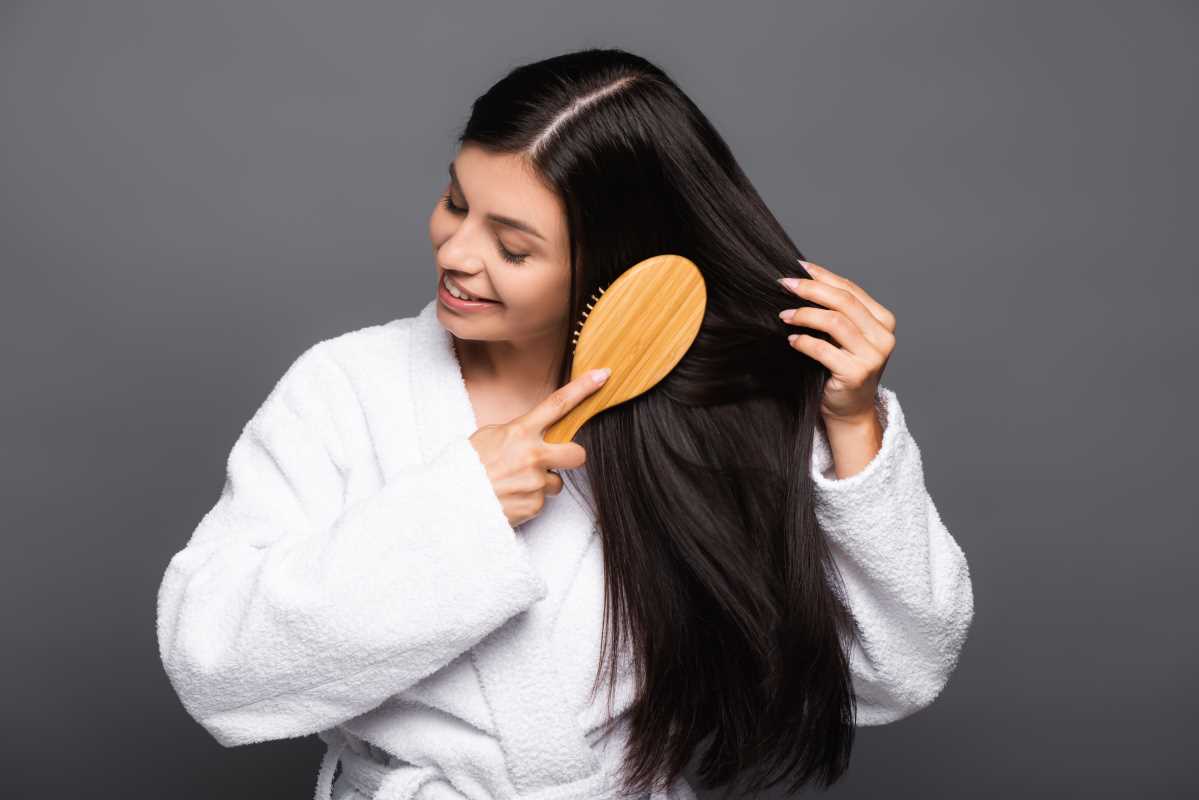
• Ceramic Round Brushes: Ideal for everyday blowouts. The metal barrel retains heat from your dryer, acting like a curling iron that smooths the cuticle while lifting the root.
• Thermal or Velcro Rollers: Perfect for hands-free volume that lasts all day. After blow-drying a section, roll the warm hair into a two-inch roller and clip it at the crown. Leave them in until the hair is completely room temperature.
• Root Volumizing Irons: A secret weapon for stubbornly flat hair. Tools like the VOLOOM feature micro-beveled plates that create a tiny textured pattern on the under-layers of your hair. By crimping only the hidden layers beneath your part line, you create an internal cushion that expands base volume significantly without teasing.
• Semi-Permanent In-Salon Root Perms: If you want volume with zero daily effort, the Korean root perm has become a massive trend.² Stylists use specialized micro-clips at the root bed with a gentle perm solution to chemically hold hair perpendicular to the scalp for six to ten weeks.
Finishing Touches for Texture and Maintenance
Once your hair is dry and styled, you need to lock in that lift without turning your head into a stiff helmet of hairspray. Heavy, wet-setting sprays will only weigh down the work you just did.
Instead, look for texturizing sprays and dry root powders containing silica silylate. This lightweight mineral creates microscopic friction between individual hair fibers. Because the strands can no longer slide smoothly against one another, they physically grip together and stand outward from your scalp.
Another professional trick is using dry shampoo proactively. Do not wait until day two when your roots are already greasy. Lightly dust a dry texturizer or non-aerosol root powder through your clean, freshly dried hair immediately after styling. The powder absorbs sebum the second your scalp produces it, keeping your roots airy from morning to night.
When you go to sleep, flip your hair into a loose high bun at the top of your head using a silk scrunchie. Sleeping this way prevents your head from crushing the roots against your pillow. In the morning, shake your hair loose, spritz a little texture spray through the crown, and your volume is ready for day two.
Sources:
1. Invisible Layers: What This Haircut Trend Really Means
https://arcscissors.com/blogs/haircut-tutorials/invisible-layers-what-this-haircut-trend-really-means
2. Korean Root Perm Feature
https://www.facebook.com/BuzzFeed/videos/korean-root-perm/623615250238996/