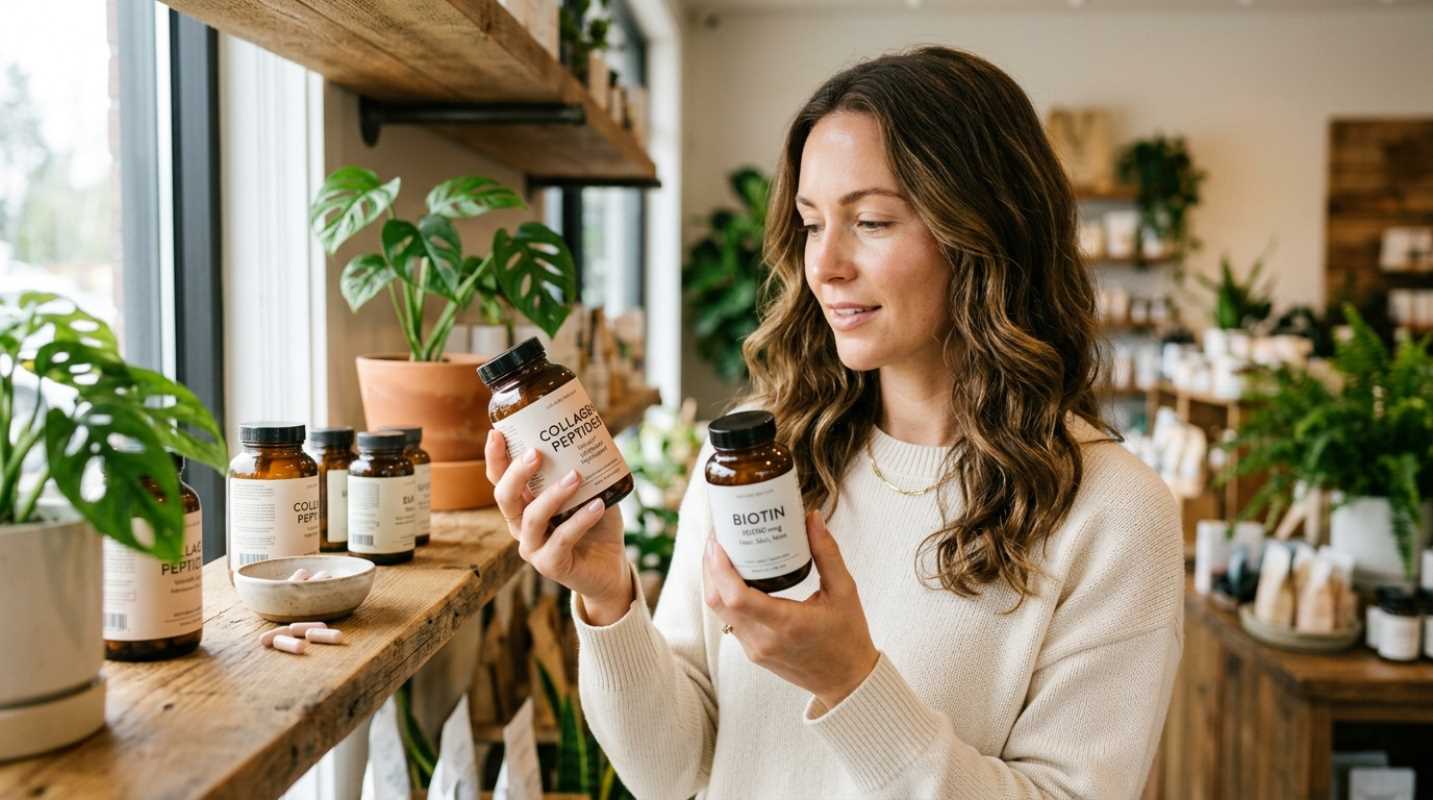
Have you walked down the wellness aisle at the grocery store lately? It feels like every brand promises a quick shortcut to glowing skin and thick hair. Shiny tubs of collagen powder and brightly colored biotin gummies claim they can transform your look from the inside out.
The "glow from within" pitch sounds convincing. Who wouldn't want to sip a berry-flavored drink and wake up with flawless skin? Marketers know this, turning simple vitamins into a multi-billion-dollar beauty movement.
So what does this actually mean for your daily routine? The truth sits somewhere between miraculous marketing and clinical reality. Supplements aren't magic potions. If your expectations aren't grounded in real science, you're mostly just turning expensive powders into very expensive bathroom visits.
The Hype vs. The Science - Setting the Stage
Walk into any drugstore and you'll see entire walls dedicated to hair, skin, and nail formulas. Consumer demand has blown up over the last few years, but so has consumer confusion.
When every bottle promises to smooth out wrinkles or double your hair length in thirty days, picking a product becomes a lot of. You start to wonder if these bottles contain actual science or just clever advertising.
The beauty industry loves to sell the idea that systemic nourishment fixes outer flaws. Although proper nutrition definitely matters, taking targeted supplements for superficial traits operates on a very different level. Knowing what oral vitamins can and cannot do saves you money and prevents disappointment.
Collagen - The Structural Protein Debate
Collagen makes up about 80 percent of your skin's dry weight. It gives your face structure, firmness, and bounce. Starting around age 20, your body produces about one percent less of it every year. That natural decline is why skin supplements exist in the first place.
When you swallow hydrolyzed collagen peptides, you're taking broken-down protein pieces. The idea is that these tiny peptides travel through your bloodstream and trick your skin cells into making fresh collagen. Does that process actually happen in a meaningful way?
Clinical trials offer a mixed picture. Some studies show that taking 2.5 to 10 grams of collagen daily for 8 to 12 weeks improves skin hydration and elasticity. One study even found that dermal density improvements stayed around for a month after people stopped taking the powder.
Here is the catch. A study published in The American Journal of Medicine reviewed 23 clinical trials and discovered a clear pattern.¹ Independent studies funded without industry money found no significant improvement in skin aging parameters. The glowing, positive results came almost entirely from trials paid for by supplement manufacturers.
Think of it like hiring a contractor to inspect his own work. He's probably going to tell you the house looks great. Although collagen might give your skin a minor moisture boost, independent science shows it won't erase deep lines or replace a good skin barrier routine.
Biotin - Separating Myth from Reality
If collagen has some mixed scientific support, biotin is almost pure marketing hype. Also known as Vitamin B7, biotin helps your body turn food into energy. Somewhere along the line, it became famous as the ultimate hair and nail growth miracle.
Have you ever looked at the back of a biotin bottle? Most beauty gummies contain anywhere from 2,500 to 10,000 micrograms per serving. Your body only needs 30 micrograms a day. That means these supplements give you up to 333 times what you actually need.
If you're a healthy adult, your diet already gives you plenty of biotin. Eggs, salmon, nuts, and seeds easily meet your daily requirement. Scientific reviews confirmed that taking extra biotin does zero things for hair growth or nail strength if you aren't deficient. True biotin deficiency is exceptionally rare.
Taking massive doses of biotin isn't just a waste of money. It carries a genuine medical safety risk. The FDA issued safety warnings because high biotin levels in your blood mess with common laboratory tests.²
• False heart attack markers - High biotin levels cause cardiac troponin tests to show falsely low readings, which has led doctors to miss active heart attacks.
• Skewed thyroid panels - Excess biotin can make your thyroid tests look completely abnormal, leading to wrong diagnoses of grave hyperthyroidism.
• Disrupted lab results - High concentrations bind to test reagents in laboratories, requiring patients to stop taking supplements 72 hours before elective blood work.
Understanding the Aisles - Quality and Dosage
If you still want to try beauty supplements, understanding the store shelves requires a careful eye. Not all products are created equal, and the supplement industry doesn't face the same strict testing rules as prescription medicine.
You can buy powders, capsules, and gummies, but form matters quite a bit.
• Powders over gummies - Collagen requires several grams of protein to be useful, which is hard to pack into a tiny gummy. Powders give you an effective 5g to 10g dose without extra sugar.
• Third-party testing - Look for seals from independent labs like USP, NSF, or Informed-Choice. These seals verify that what is on the label matches what is in the jar.
• Ingredient transparency - Avoid secret proprietary blends. You want to know exact milligram amounts for every single active ingredient.
Beyond the Bottle - Building a Sustainable Routine
Supplements are optional add-ons, not foundational requirements. Skipping seven hours of sleep and eating poorly won't be fixed by two pink gummies in the morning. Your body prioritizes key organs first, so hair and skin get leftovers regardless of what you swallow.
Board-certified experts at the American Academy of Dermatology emphasize that topical habits beat oral supplements every time.³ If you want healthy skin and hair, focus on proven basics
• Daily broad-spectrum sunscreen - UV rays destroy collagen faster than any supplement can rebuild it. Protect your skin barrier every single morning.
• Topical retinoids - Retinol and tretinoin have decades of clinical research proving they stimulate fresh collagen production right where you need it.
• Targeted hair treatments - If your hair is thinning, consult a dermatologist to check iron levels or try clinically proven options like minoxidil.
• Protein-rich diet - Eating lean meats, fish, tofu, and legumes gives your body the amino acid building blocks to make its own proteins naturally.
So what is the final verdict? Who should actually buy these products?
If you have spare room in your budget and want a small hydration boost, a third-party tested collagen powder might be worth a try for 3 to 6 months. Take photos to track your skin's progress and see if you notice a real difference.
Skip the biotin entirely unless a doctor runs blood work and confirms an actual deficiency. Your wallet, your hair, and your lab tests will thank you.
Sources:
1. Industry Reacts to Meta-Analysis Concluding Collagen Supplements Show No Proven Benefit for Skin Aging
https://www.nutraingredients.com/Article/2025/08/26/industry-reacts-to-meta-analysis-concluding-collagen-supplements-show-no-proven-benefit-for-skin-aging/
2. FDA Biotin Interference Warning
https://www.fda.gov/medical-devices/in-vitro-diagnostics/biotin-interference-troponin-lab-tests-assays-subject-biotin-interference
3. American Academy of Dermatology - Supplements Debunking Common Myths
https://www.aad.org/news/supplements-debunking-common-myths
*This article on modernlifestyle is for informational and educational purposes only. Readers are encouraged to consult qualified professionals and verify details with official sources before making decisions. This content does not constitute professional advice.*