Have you ever saved your sunscreen strictly for beach trips and pool days? You're definitely not alone. Many people view sun protection as a seasonal hassle rather than an everyday morning needed. Here's the reality check. Up to 80% of ultraviolet rays pass right through cloud cover on overcast days.
That means your skin absorbs damage while you walk the dog, run errands, or sit near an office window. Unprotected UV exposure is responsible for roughly 90% of non-melanoma skin cancers and 65% of melanomas. In fact, 1 in 5 Americans will develop skin cancer in their lifetime, with nearly 9,500 cases diagnosed every single day.¹
Beyond cancer prevention, solar radiation is the main driver of premature skin aging. Fine lines, sagging, and dark spots rarely stem from simple aging alone. They mostly come from sun exposure. Building a solid sunscreen routine is the easiest way to keep your skin healthy, clear, and glowing for years to come.
Demystifying the Numbers - Understanding SPF Ratings
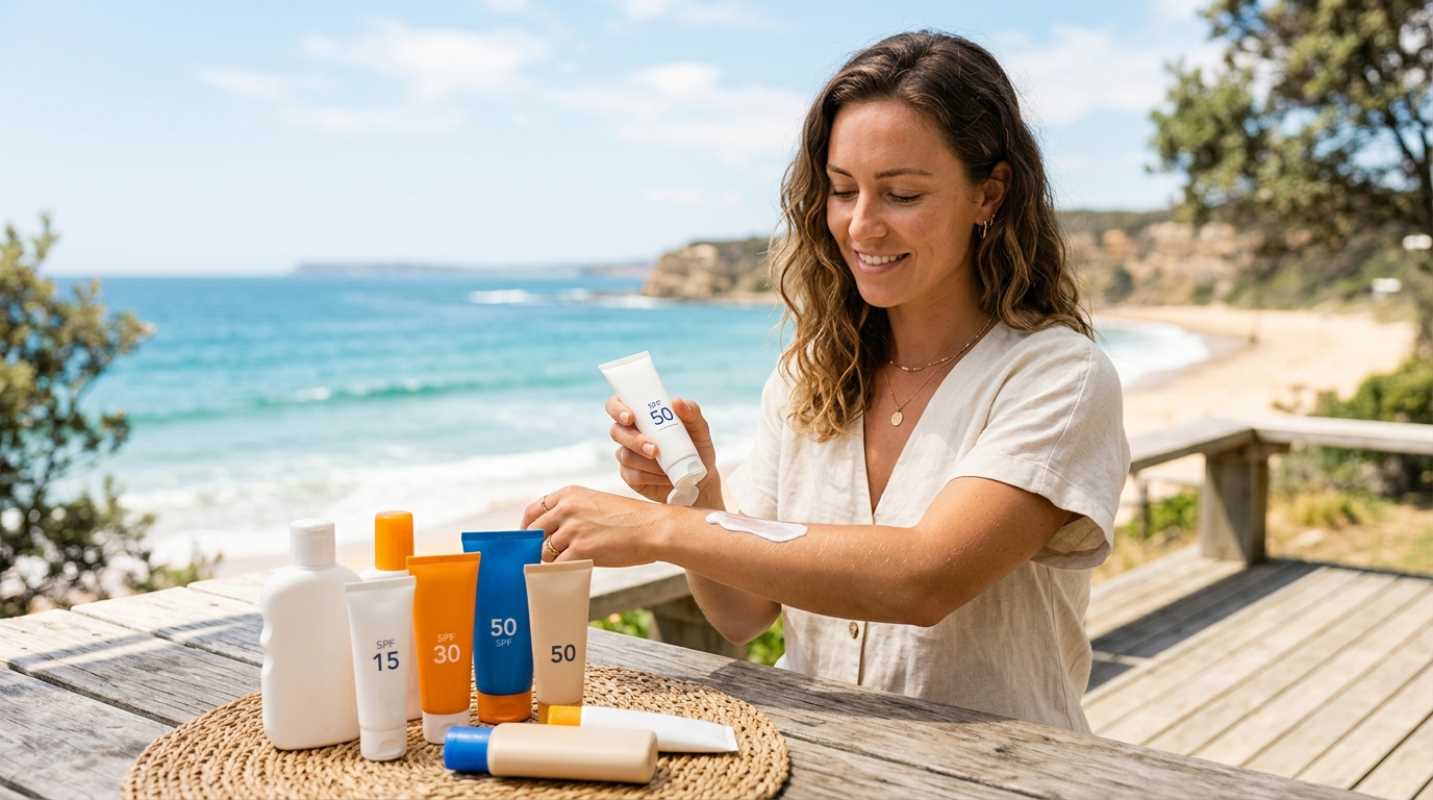
Walk down any beauty aisle and you'll see bottles marked SPF 15, 30, 50, and even 100. So what do those numbers actually mean?
SPF stands for Sun Protection Factor, and it measures how well a product shields your skin against UVB rays. These short wavelengths cause sunburn and direct cell damage. The math behind the numbers trips a lot of people up because the protection scale is logarithmic, not linear
• SPF 15: Filters about 93% of UVB rays.
• SPF 30: Filters about 97% of UVB rays.
• SPF 50: Filters about 98% of UVB rays.
• SPF 100: Filters about 99% of UVB rays.
Jumping from SPF 30 to SPF 60 doesn't give you twice as much protection. It only raises your UVB protection by roughly 1%. Dermatologists recommend an SPF 30 or higher for daily wear. Under updated Skin Cancer Foundation guidelines, an active outdoor day calls for at least SPF 50.
You also need to look for the words broad spectrum on the bottle. Although SPF measures UVB protection, broad-spectrum formulas safeguard you against UVA rays as well. UVA rays account for 95% of the UV radiation reaching Earth. They penetrate deep into the dermis, passing through windows to cause premature wrinkles and hyperpigmentation.² In Asian skincare products, you might notice a PA rating system, where PA++++ indicates the highest level of defense against UVA rays.
Mineral vs Chemical Sunscreen - The Great Debate
Once you know your SPF number, you have to decide between two distinct types of sunscreens: mineral and chemical. Neither option is universally superior, but they work quite differently on your skin.
• Mineral Sunscreens: These formulas use active ingredients like zinc oxide and titanium dioxide. They sit on top of your skin and act as physical blockers, absorbing almost all incoming UV rays and scattering the rest. They work immediately upon application and rarely irritate sensitive skin, but thicker formulas can leave a chalky white cast on deeper skin tones.
• Chemical Sunscreens: These formulas use active ingredients like avobenzone, octisalate, and homosalate. They absorb into the top layers of your skin, capture UV rays, and convert them into harmless heat. Chemical sunscreens blend effortlessly into any skin tone, though they require 15 to 20 minutes after application to form an effective protective film.
Recent regulatory changes have upgraded chemical sunscreens significantly. The SAFE Sunscreen Standards Act modernized how the FDA reviews active ingredients, opening the door for advanced global filters. As a result, the FDA approved Bemotrizinol (BEMT), marking the first new general sunscreen filter approved in the United States in over 20 years.³ This ingredient provides long-lasting, broad-spectrum protection without feeling greasy.
Choosing Sunscreen for Different Skin Types
Finding the right SPF depends heavily on your unique skin type. If you hate how a lotion feels, you won't wear it every day. Here's how to match a formula to your specific needs
• Oily and Acne-Prone Skin: Look for oil-free, non-comedogenic gel formulas or lightweight fluids. Matte-finish chemical options or fluid mineral liquids containing zinc oxide help soothe active breakouts without clogging pores.
• Dry or Mature Skin: Choose rich, hydrating creams that feature moisturizing ingredients like hyaluronic acid, ceramides, or glycerin. Nourishing lotions restore moisture while shielding delicate skin from sun-induced aging.
• Sensitive Skin or Rosacea: Stick with pure mineral sunscreens containing zinc oxide. Zinc naturally calms skin irritation and redness, while mineral formulas avoid the potential stinging associated with older chemical filters.
Application Mastery and Maintenance
Buying a great bottle is only half the battle. How you apply your sunscreen determines whether you actually get the protection rating listed on the bottle.
Most people apply less than half the recommended amount. For your face and neck, use the two-finger rule. Squeeze two full strips of sunscreen along your index and middle fingers, then rub that entire amount into your skin. For full-body coverage, you need about one full shot glass (one ounce) of product.
Timing and maintenance matter just as much as application volume
1. Apply chemical sunscreen 15 to 20 minutes before heading outdoors. Mineral sunscreens work as soon as you put them on.
2. Reapply every two hours when you stay outdoors, or immediately after swimming, heavy sweating, or towel drying.
3. Layer properly under makeup by applying sunscreen as the final step of your skincare routine. Let it sit for two minutes before brushing on foundation or tint.
Your Long-Term Glow Approach
Selecting the ideal sunscreen doesn't require a degree in dermatology. When you understand what SPF numbers mean, balance mineral and chemical options, and choose a texture that suits your skin, staying protected becomes second nature.
The single best sunscreen on the market is simply the one you feel comfortable wearing every single day. Make sun protection an everyday habit, and your skin will stay radiant and healthy for decades.
Sources:
1. American Academy of Dermatology - Skin Cancer Statistics
https://www.aad.org/media/stats-sunscreen
2. American Academy of Dermatology - How to Select a Sunscreen
https://www.aad.org/public/everyday-care/sun-protection/shade-clothing-sunscreen/understand-sunscreen-labels
3. American Academy of Dermatology - FDA Approves New Sunscreen Ingredient
https://www.aad.org/news/fda-approves-new-sunscreen-ingredient
*This article on modernlifestyle is for informational and educational purposes only. Readers are encouraged to consult qualified professionals and verify details with official sources before making decisions. This content does not constitute professional advice.*