Have you ever caught yourself staring at a freshly chipped nail right before an important meeting? Or maybe you've spent months trying to grow them out, only for a subtle split to ruin all your progress. It's an annoying feeling, but you're definitely not alone. Brittle, peeling nails affect roughly 20% of the population, hitting women about twice as often as men.¹
Here's something most people don't realize: fingernails grow at an average rate of 3 millimeters per month, which means it takes about six months to fully regrow a nail from base to tip.² That means a peeling tip today might actually reflect environmental stress or hydration loss from back in the fall.
Taking care of your hands doesn't require hours at a high-end salon or an overly complicated routine. With a few smart daily habits, you can build strong, resilient nails that hold up to real life. Here is everything you need to know to get your hands looking and feeling great.
Building Effective Healthy Nail Care Routines
Hydration is the single most important factor in keeping your nails resilient. Your nail plate is made of layers of a structural protein called keratin. When those layers dry out, they separate and chip. To keep them bound together, you need to trap moisture inside the nail plate every single day.
• The Post-Wash Rule: Always apply hand cream or cuticle oil immediately after washing your hands while your skin and nails are still slightly damp.
• Key Hydration Ingredients: Look for products containing jojoba oil, which has a small molecular size that easily penetrates keratin layers. Glycerin and hyaluronic acid draw water into dry nails, while petrolatum, shea butter, and 5% to 10% urea lock in deep moisture.
• Cuticle Protection: Never cut or trim your cuticles. Your cuticle is your body's natural waterproof seal that protects the growing nail matrix from bacteria and fungi. Cutting it opens the door to painful infections like paronychia. Instead, gently push cuticles back with an orange-wood stick after a warm shower.
For diet, what you eat directly affects your fingertips. A balanced diet rich in protein, iron, zinc, and vitamins A, C, and E gives your body the raw materials needed to produce tough keratin. If your nails are exceptionally weak, taking 2.5 mg of oral biotin daily can help increase plate thickness over three to six months. Just be sure to tell your doctor before taking biotin, as high doses can interfere with important blood test results.
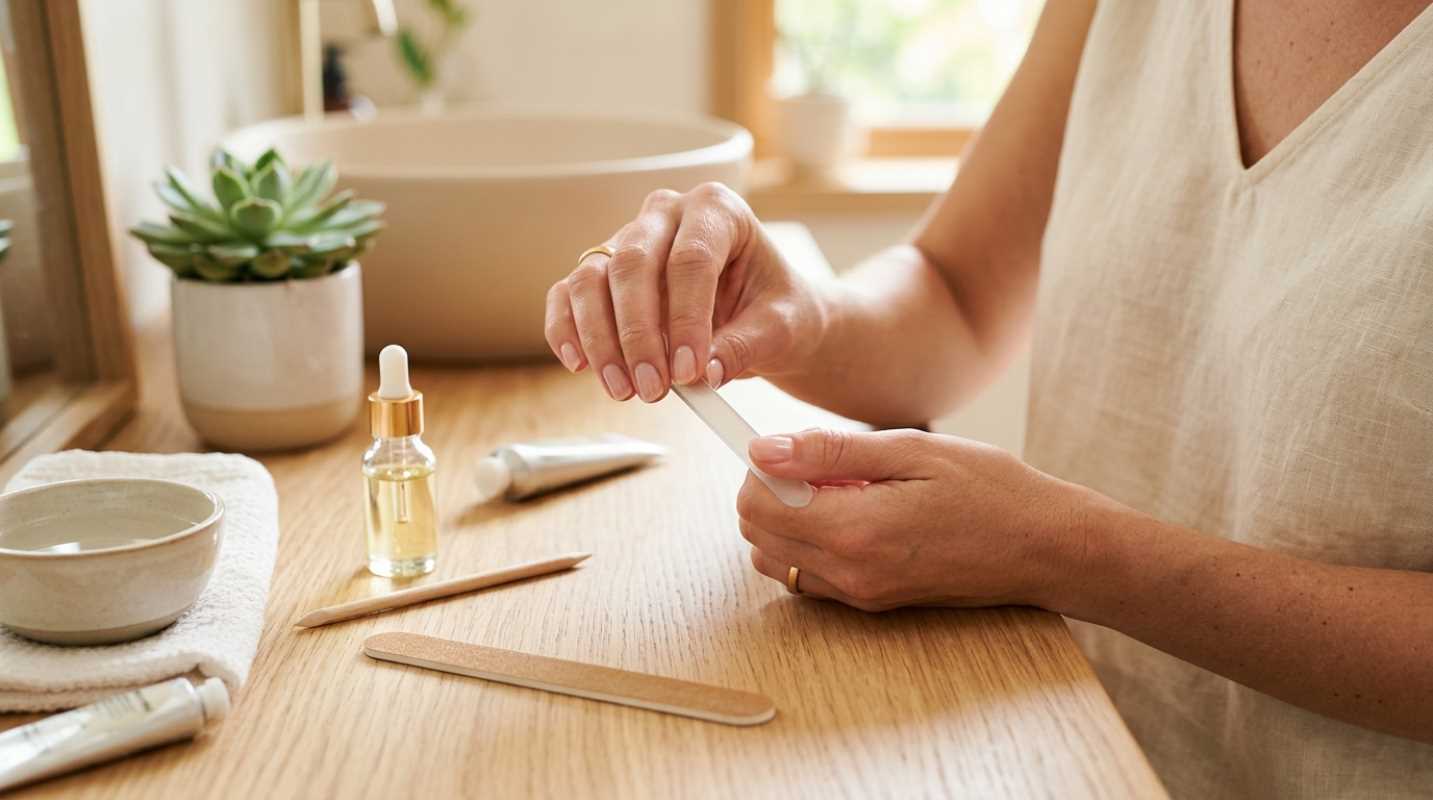
Your choice of tools makes a massive difference, too. Throw away those coarse metal files and rough sandpaper boards. They shred natural keratin fibers like a saw through dry wood. Instead, switch to a fine-grit emery board or a tempered glass file. Glass files micro-seal the free edge of your nail, preventing future splits. Always file strictly in one direction, moving from the outer edge toward the center. Sawing back and forth creates tiny tears that guarantee peeling later. And remember: never file wet nails, as damp keratin is far too soft to handle the friction.
Preventing Brittle or Peeling Nails for Good
If your nails are actively flaking in layers, you're likely dealing with onychoschizia. That's the clinical term for horizontal peeling at the free edge of the nail, usually caused by external environmental damage.
Think of your nail like a sponge. When you submerge your hands in water, the keratin structure swells. As your hands dry, the keratin rapidly shrinks back down. This constant expansion and contraction breaks the bonds between keratin layers, causing them to flake apart. Guidelines from dermatologists confirm that these hydration cycles and harsh household chemicals cause the vast majority of peeling nails.³
• Wear Protective Gloves: Make cotton-lined rubber or vinyl gloves a non-negotiable rule whenever you wash dishes, clean counters, or handle garden soil.
• Ditch Harsh Soaps: Swap out aggressive hand washes for gentle, moisturizing liquid soaps.
• Limit Acetone Exposure: Standard nail polish removers strip natural lipids from your nail bed. Choose acetone-free formulas whenever possible, or save acetone strictly for heavy-duty polish removal.
• Apply Overnight Occlusives: Before going to sleep, massage a thick layer of petrolatum or heavy cream into your nails and cuticles to restore lost lipids while you rest.
Pro-Level At-Home Manicure Tips
You don't need to give up polish to keep your nails healthy. You just need to adjust your technique so you aren't damaging the underlying nail plate. A solid at-home manicure gives you long-lasting color while protecting the natural surface underneath.
1. Cleanse and Prep: Wash your hands and gently wipe your nails with a light cleanser to remove surface oils.
2. Apply a Base Coat: Never skip this step. A quality base coat forms a protective barrier between your natural keratin and pigment, preventing dark polishes from staining your nails.
3. Paint Thin Layers: Apply two thin coats of color rather than one thick layer. Thin coats dry faster and adhere much better without bubbling.
4. Seal with a Top Coat: A clear top coat caps the free edge, locking in color and protecting your nails from everyday friction.
If you love gel manicures, take extra precautions to avoid long-term damage. Apply broad-spectrum SPF 30+ sunscreen to your hands 30 minutes before placing them under a UV curing lamp, or wear fingerless UV-protective gloves. When it's time for removal, never pick or scrape gel off your nails. Peeling off gel manually pulls away the top layer of healthy keratin cells, leaving your nails paper-thin. Instead, soak cotton balls in acetone, wrap them individually over your fingertips with foil, and let the polish dissolve naturally. Practice polish fasts for a week or two between gel cycles so your nails can recover their natural lipids.
Consistency is Your Greatest Asset
Building strong, healthy nails doesn't require a radical lifestyle overhaul. It comes down to small, consistent habits: applying lotion after you wash your hands, slipping on gloves before tackling dirty dishes, and treating your cuticles with care. When you give your nails the daily hydration and protection they need, you'll notice a real difference in their strength and flexibility within a few growth cycles.
Although most peeling and brittleness comes from everyday wear and tear, your nails can also signal underlying health issues. Keep an eye out for warning signs that warrant a trip to a board-certified dermatologist
• Beau's Lines: Deep horizontal grooves running across your nails, which often follow a severe illness, high fever, or physical trauma.
• Melanonychia: Dark brown or black vertical bands running down the nail, which require professional evaluation to rule out subungual melanoma.
• Onycholysis: The lifting or separation of the nail plate from the underlying nail bed, frequently linked to thyroid conditions, fungal infections, or psoriasis.
• Severe Pitting or Crumbling: Small pitted depressions or crumbling edges that can point to nail psoriasis or severe eczema.
Treat your hands with a little extra care today. A couple of quick routine tweaks will pay off in smooth, resilient nails that look great every day of the week.
Sources:
1. Cleveland Clinic
https://health.clevelandclinic.org/brittle-nails-causes-treatment
2. Healthline
https://www.healthline.com/health/peeling-nails
3. American Academy of Dermatology
https://www.aad.org/public/everyday-care/nail-care-secrets/basics/healthy-nail-tips
*This article on modernlifestyle is for informational and educational purposes only. Readers are encouraged to consult qualified professionals and verify details with official sources before making decisions. This content does not constitute professional advice.*