Have you ever looked at your six-step facial routine and then washed your body with whatever random bar soap was sitting on the bath ledge? You are not alone. For a long time, standard advice acted like skincare stopped right at the jawline. But your skin is your body's largest organ, and the skin on your collarbones, arms, and legs deserves just as much attention as your forehead and cheeks.
The good news is that the beauty world is finally catching up. People call this shift the skinification of body care. Recent industry data shows that 82% of women globally want facial-grade results from their body products.¹ On top of that, sales for high-performance body serums shot up 42% over the past year.¹ We are no longer settling for simple scented lotions that just sit on top of our arms. Half of U.S. adults now use three or more body care products regularly, turning body care into an intentional routine rather than a rushed chore.
So why does your body need active ingredients anyway? It comes down to basic skin biology. Body skin, especially on your thighs, arms, and back, has a thicker outer layer and far fewer oil-producing glands than your face. That means your body skin dries out faster and struggles to shed dead skin cells efficiently on its own. Treating your whole body with targeted active ingredients keeps your protective barrier strong, smooth, and resilient.
The Foundation - Exfoliation and Moisturizing Done Right
If you want smooth skin below the neck, you have to master the basics first. That starts with rethinking how you exfoliate.
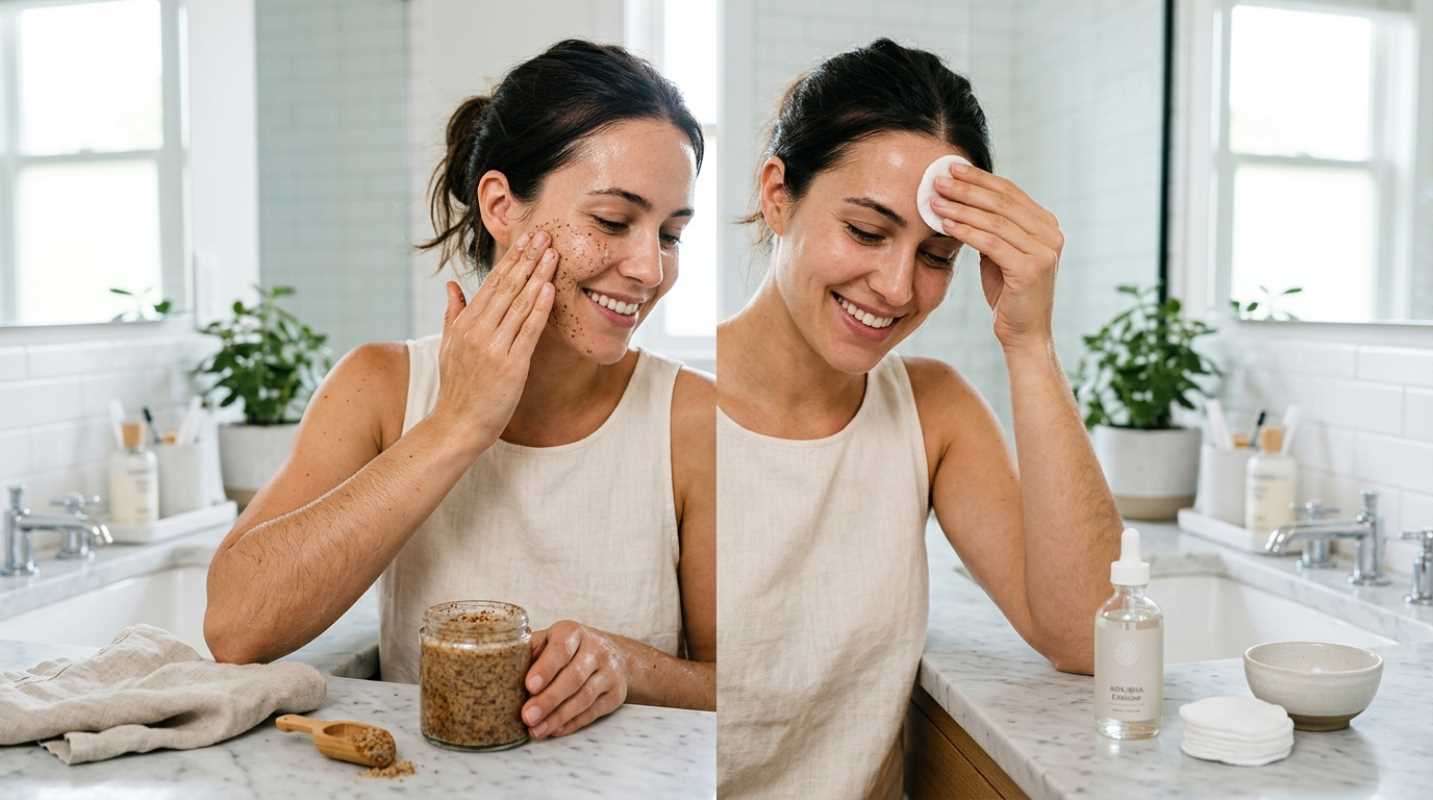
For decades, the go-to approach was scrubbing away with plastic loofahs or rough sugar scrubs. But heavy physical scrubbing can cause microscopic tears in your skin, leading to inflammation and worse texture over time. Chemical exfoliation is a much smarter choice. Ingredients like alpha hydroxy acids (AHAs) and beta hydroxy acids (BHAs) gently break down the glue holding dead cells together without any abrasive friction.
Once you exfoliate, timing your moisturizer is everything. Have you ever put on lotion only to feel tight and flaky two hours later? That usually happens because you applied it to bone-dry skin. Dermatologists recommend the "soak and smear" method to keep hydration locked in tight.
Here are the core rules for a solid foundation
• Damp skin application - Apply your lotion within three minutes of stepping out of the shower while surface water is still present.
• Lukewarm water temperatures - Keep your shower warm instead of hot, since hot water strips away your natural lipid barrier.
• Consistency over intensity - Hydrate every single day rather than trying to fix dry patches with a heavy butter once a week.
Targeted Solutions - Treating Keratosis Pilaris and Dry Patches
If you have small, rough bumps on the back of your arms or thighs, you probably have Keratosis Pilaris (KP). Often called strawberry skin, KP affects up to 80% of teenagers and roughly 40% of adults.² It happens when your body produces excess keratin, forming hard plugs inside your hair follicles. Cold weather and low humidity make these plugs harden even more.
To clear up KP, you need specific active ingredients that dissolve those keratin plugs while calming the surrounding area.
• Lactic Acid (AHA) - A chemical exfoliant that breaks down keratin while drawing water back into the skin. Look for formulations between 5% and 12%.
• Salicylic Acid (BHA) - An oil-soluble acid that penetrates deep into hair follicles to clear out stubborn plugs. Concentrations between 0.5% and 2% work best.
• Urea - A true heavy hitter. At concentrations between 10% and 20%, urea breaks the tough bonds of keratin plugs. At lower concentrations, it acts as a soft hydration agent.
• Niacinamide - Vitamin B3 helps reduce the red, irritated rings around bumps while rebuilding your lipid barrier.
What about severe dry patches? Dry skin occurs when your skin loses needed lipids, causing water to evaporate rapidly. When dealing with severe dryness on your elbows, knees, or shins, look for rich creams packed with ceramides, glycerin, and colloidal oatmeal. Ceramides repair the broken seal, while glycerin draws water back into the upper skin layers.
Curating Your Shelf - Smart Product Selection
Building a high-performance body routine does not mean buying a dozen different bottles. You just need to read ingredient labels closely and pick products that match your specific skin needs.
When reviewing body lotions or serums, check where the active ingredients fall on the label. If an acid or ceramide is listed at the very bottom, it might not be concentrated enough to deliver noticeable changes. You also want to balance active exfoliating treatments with barrier repair so you do not cause irritation.
Here are the key product categories to consider for a complete setup
• Exfoliating body washes - Cleansers with salicylic or lactic acid to clear pores while you shower.
• Active leave-on lotions - Treatments containing glycolic acid or urea to smooth out rough texture overnight.
• Barrier repair creams - Rich everyday lotions filled with ceramides and squalane to lock in hydration.
• Occlusive balms - Heavy ointments containing petrolatum or shea butter to protect extra dry spots like heels and elbows.
Investing in Your Skin's Longevity
Taking care of your body skin is not just about looks. It is an investment in your daily comfort and overall self-confidence. When your skin barrier stays healthy, you avoid itchy winter flares, rough texture, and inflamed bumps that leave you feeling uncomfortable in your own skin.
Building your routine should feel simple and manageable. Start small by swapping out a harsh soap for a gentle active cleanser, or by committing to lotion right after your shower. Over time, these small habits protect your skin barrier for years to come. Your body works hard every single day, so giving it the same thoughtful care you give your face is the least it deserves.
Sources:
1. Cosmetics Business Body Care Trends
https://cosmeticsbusiness.com/cosmetics-business-reveals-the-top-5-body-care
2. NCBI Keratosis Pilaris Overview
https://www.ncbi.nlm.nih.gov/books/NBK546708/
*This article on modernlifestyle is for informational and educational purposes only. Readers are encouraged to consult qualified professionals and verify details with official sources before making decisions. This content does not constitute professional advice.*