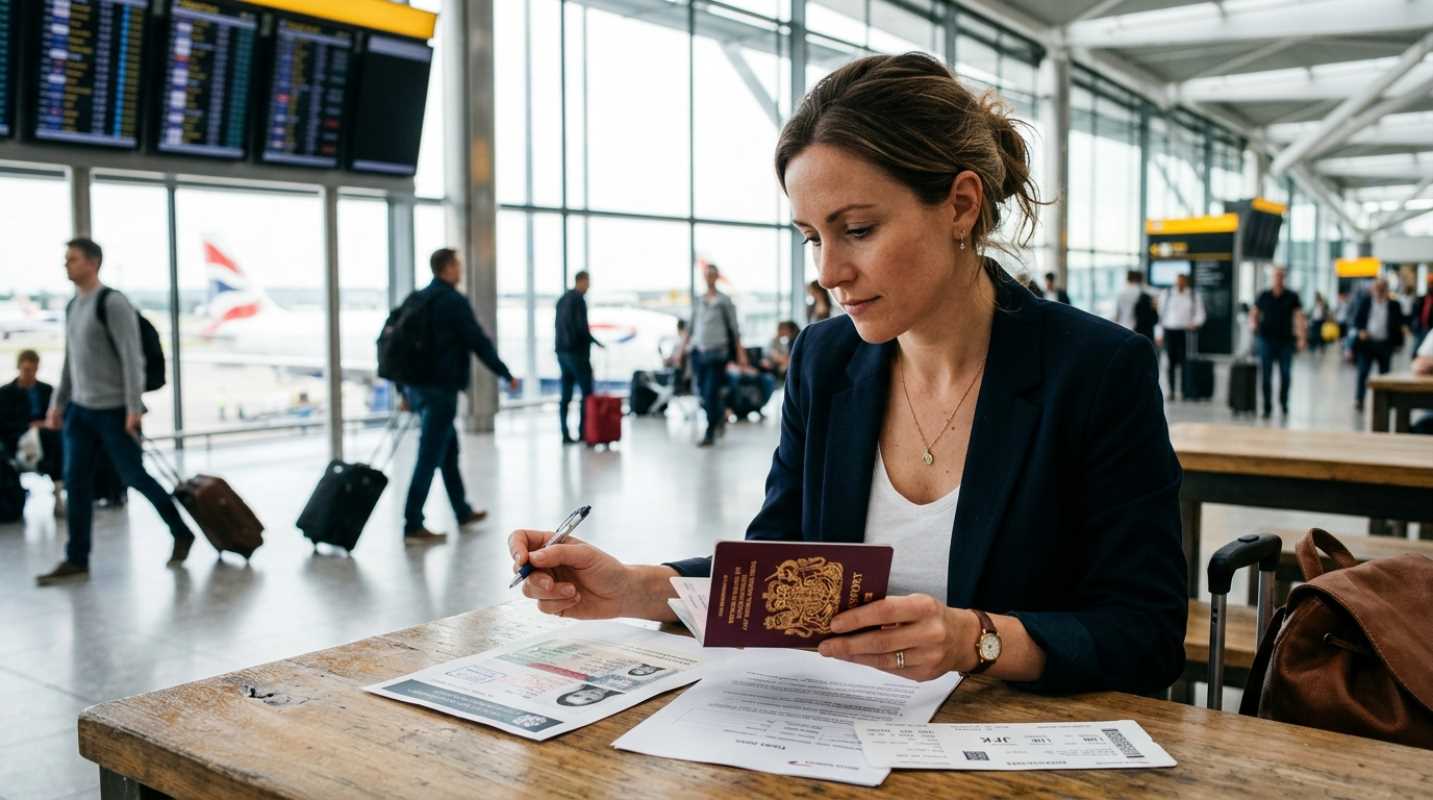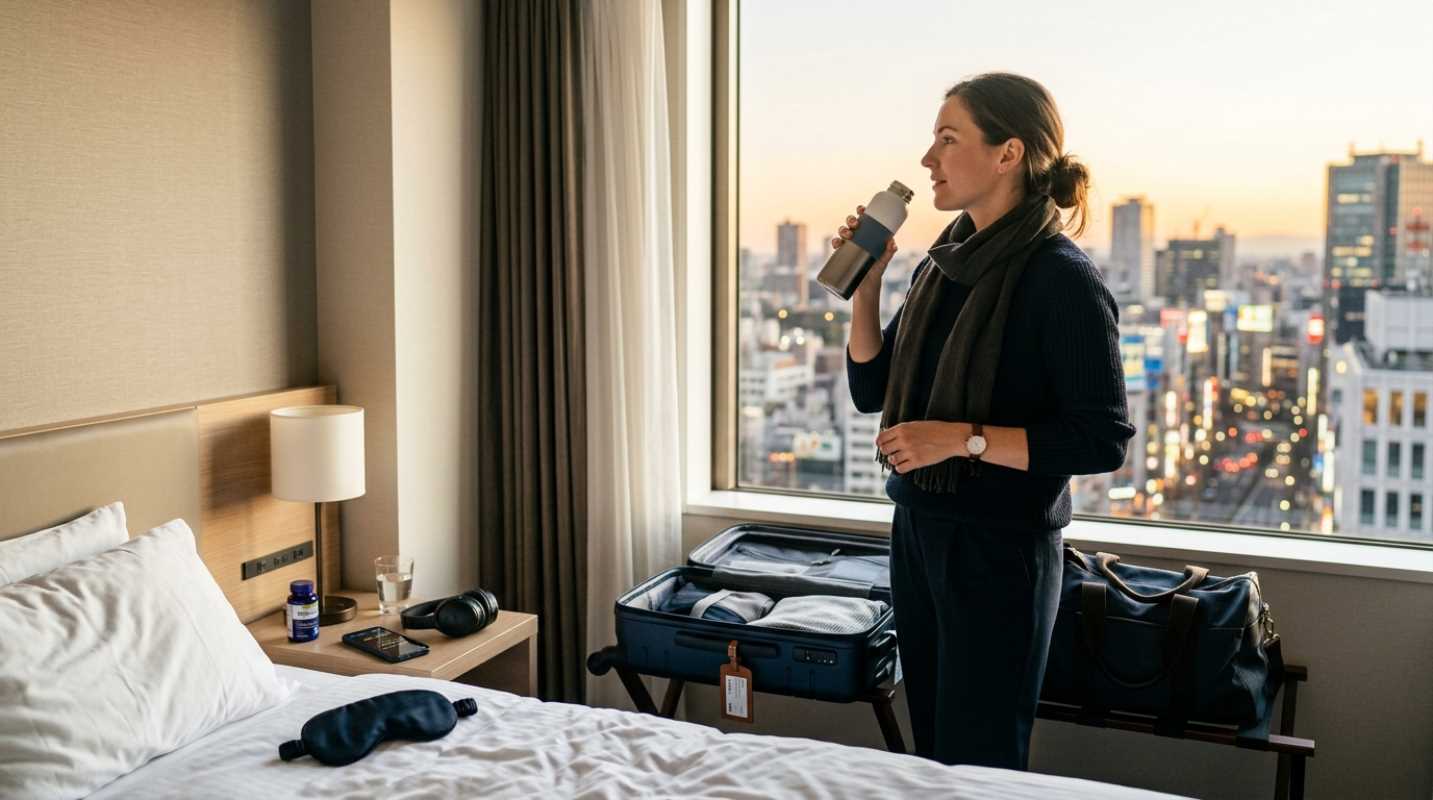
You step off a twelve-hour flight, handle customs, and finally reach your hotel room. Local time says it is 2:00 PM, and bright sunshine is pouring through the window, but your body insists that it is 3:00 AM and time for deep sleep. Have you been there?
That miserable, foggy state is not just simple exhaustion from sitting in a cramped airplane seat. It is a biological battle happening inside your head. Up to 93 percent of long-haul international travelers experience jet lag symptoms ranging from brain fog and insomnia to digestive issues.⁷ Understanding how your body clock operates is the first real step to taking back control of your trips.
Understanding Why Jet Lag Hits Hard
To fix jet lag, you need to know what you are actually fighting. Simple travel fatigue usually disappears after a good meal, a tall glass of water, and one solid night of rest. Jet lag disorder, on the other hand, is a full neurobiological disconnect.
Deep inside your brain sits a tiny cluster of cells called the suprachiasmatic nucleus. Think of it as the central conductor of your biological clock. It controls your sleep cycles, hormone release, body temperature, and digestion. When you rapidly cross multiple time zones, your central clock gets out of sync with local destination time. To make matters worse, peripheral clocks inside your gut, liver, and heart adapt at different speeds, leaving your entire body operating on conflicting schedules.
Why does traveling east always feel so much worse than traveling west?
It comes down to simple human biology. Most people have an internal body clock that naturally runs slightly longer than 24 hours, closer to 24.2 hours. When you travel west, you are extending your day. Your body handles that delay relatively well, adapting at a rate of roughly 1.5 hours per day. But when you travel east, you compress your day. You are asking your internal clock to advance against its natural momentum, which slows your recovery down to a sluggish 1.0 hour per day.
The good news? You do not have to surrender a week of your vacation or business trip to zombie-like fatigue. By working with your biology instead of against it, you can reset your system in record time.
Pre-Flight Prep - Adjusting Sleep Schedules Before a Flight
A lot of travelers make the mistake of pulling an all-nighter right before a big trip, hoping they will just crash on the plane. In reality, walking onto a flight with severe sleep debt makes jet lag vastly worse. You want to arrive at the airport with your body already moving toward your destination's schedule.
Starting two or three days before your departure, adjust your routine in small, manageable increments
• For Eastbound Flights: Shift your bedtime and wake time 30 to 60 minutes earlier each day. Seek out bright light first thing in the morning to encourage your brain to wake up sooner.
• For Westbound Flights: Push your sleep time back by 30 to 60 minutes. Get bright light in the late afternoon or early evening to delay your melatonin production.
• Adjust Your Meal Times: Shift your breakfast, lunch, and dinner closer to the times you will be eating at your destination. Your digestive system has its own internal timing, and shifting your meals early prepares your gut for the change.
Small adjustments ahead of time reduce the total time zone shock your brain experiences once you cross the ocean.
In-Flight Tactics - Managing Time Zone Changes Mid-Air
The moment you settle into your airplane seat, reach down and set your watch to your destination's local time. From that second forward, mentally operate as if you are already living in that new time zone. If it is 11:00 PM at your destination, close your eyes and try to sleep, even if you are not fully tired yet.
Managing your physical environment inside the cabin makes a massive difference in how you land
• Hydrate Constantly: Airplane cabin air has humidity levels around 10 to 20 percent, which is drier than most deserts. Dehydration causes headaches and deepens fatigue, so drink water consistently throughout the flight.
• Skip the Alcohol: The complimentary wine might seem tempting, but alcohol degrades your sleep quality, suppresses deep REM sleep, and accelerates dehydration. Avoid caffeine within six hours of your target destination bedtime as well.
• Block Out Stimuli: High-flying aircreate cabins are loud and constantly lit. Use a light-blocking eye mask and quality noise-canceling headphones to build a quiet, dark environment that encourages rest.
Keep in mind that long, deep sleep on a plane is only helpful if it aligns with night hours at your destination. If it is daytime where you are landing, restrict yourself to brief 20-minute power naps to avoid ruining your ability to sleep that night.
The First 24 Hours - Needed Jet Lag Recovery Techniques
What you do during your first day on the ground determines how quickly your body clock recovers. The absolute most effective tool you have for resetting your central clock is natural sunlight. Light acts as the primary signal to your brain that the day has officially begun.
To use light correctly, you need to understand your core temperature minimum. Your body reaches its lowest temperature about two hours before your typical wake-up time.
When you fly east, you want morning sunlight right after that temperature minimum to jumpstart your brain and push your clock forward. When you fly west, you want late afternoon sunshine before your temperature minimum to delay your clock.
Movement is another high-yield recovery tactic. Instead of crawling straight into bed for an afternoon nap when you arrive, force yourself to get outside for light exercise. A steady walk outside gives you natural light, raises your core body temperature, and boosts daytime alertness.
Strategic eating keeps your stomach on track, too. Fasting toward the end of your flight and eating a protein-rich meal at the local breakfast time sends a powerful signal to the clocks in your liver and digestive organs, aligning them with your brain.
Advanced Hacks - Supplements and Technology
When you need to bounce back even faster, targeted tools can provide a substantial advantage.
Melatonin is widely used, but most people use it incorrectly. Taking high doses of five or ten milligrams can leave you groggy and hungover the next morning. Research shows that low doses between 0.5 mg and 3 mg are far more effective at shifting your circadian phase without unwanted side effects. Fast-acting melatonin works as a signal of darkness, telling your body that night has arrived. Take it 30 to 60 minutes before your target destination bedtime for the first few nights, especially after eastbound flights.
Technology has also transformed how we approach international travel. Custom algorithmic tools can map out your exact schedules for light exposure, light avoidance, caffeine intake, and melatonin based on your personal sleep habits and flight routing.
Following a customized schedule removes the confusion of trying to calculate temperature minimums and phase shifts on your own. Travel studies reveal that passengers who follow personalized circadian recommendations avoid severe jet lag at remarkable rates compared to those who guess.⁶
So what does this actually mean for your next trip? It means jet lag is not an inevitable tax you must pay for seeing the world. By taking charge of your light exposure, sleep windows, and hydration, you can step off the plane feeling focused, energized, and ready to enjoy your trip from day one.
If you travel across time zones constantly for work or suffer from pre-existing sleep disorders, consider speaking with a sleep physician. A specialist can offer customized phototherapy protocols or medical guidance tailored to your specific travel pattern.
Sources:
1. CDC Yellow Book - Jet Lag Disorder
https://www.cdc.gov/yellow-book/hcp/travel-air-sea/jet-lag-disorder.html
2. Frontiers in Behavioral Neuroscience - Circadian Adaptation
https://www.frontiersin.org/journals/behavioral-neuroscience/articles/10.3389/fnbeh.2025.1535124/full
3. Forbes - Circadian Science and Jet Lag Recovery
https://www.forbes.com/sites/emesemaczko/2026/04/27/what-nasa-linked-circadian-science-can-teach-travelers-about-beating-jet-lag/
*This article on modernlifestyle is for informational and educational purposes only. Readers are encouraged to consult qualified professionals and verify details with official sources before making decisions. This content does not constitute professional advice.*