Have you ever opened your pantry looking for a quick snack, only to be met by an avalanche of half-empty cereal boxes and obscure spices? You're definitely not alone. A cluttered kitchen pantry creates unnecessary friction at the start of your day, making simple meal preparation feel like a chore.
When your storage space is organized, your mind follows. Knowing exactly where to find the olive oil or oats cuts down on daily decision fatigue and sets up an easy rhythm for cooking. Modern kitchen designs are leaning heavily into functional spaces that look clean while working hard behind the scenes. In fact, 87% of kitchen designers report that homeowners now prefer pantries hidden behind cabinet doors or panel fronts to keep mess out of sight.¹
Organizing your food storage isn't just about making shelves look pretty for social media. It's about building a system that fits your daily routine, cuts down on food waste, and saves you money at the grocery store.
Mastering Pantry Layout and Zoning Ideas
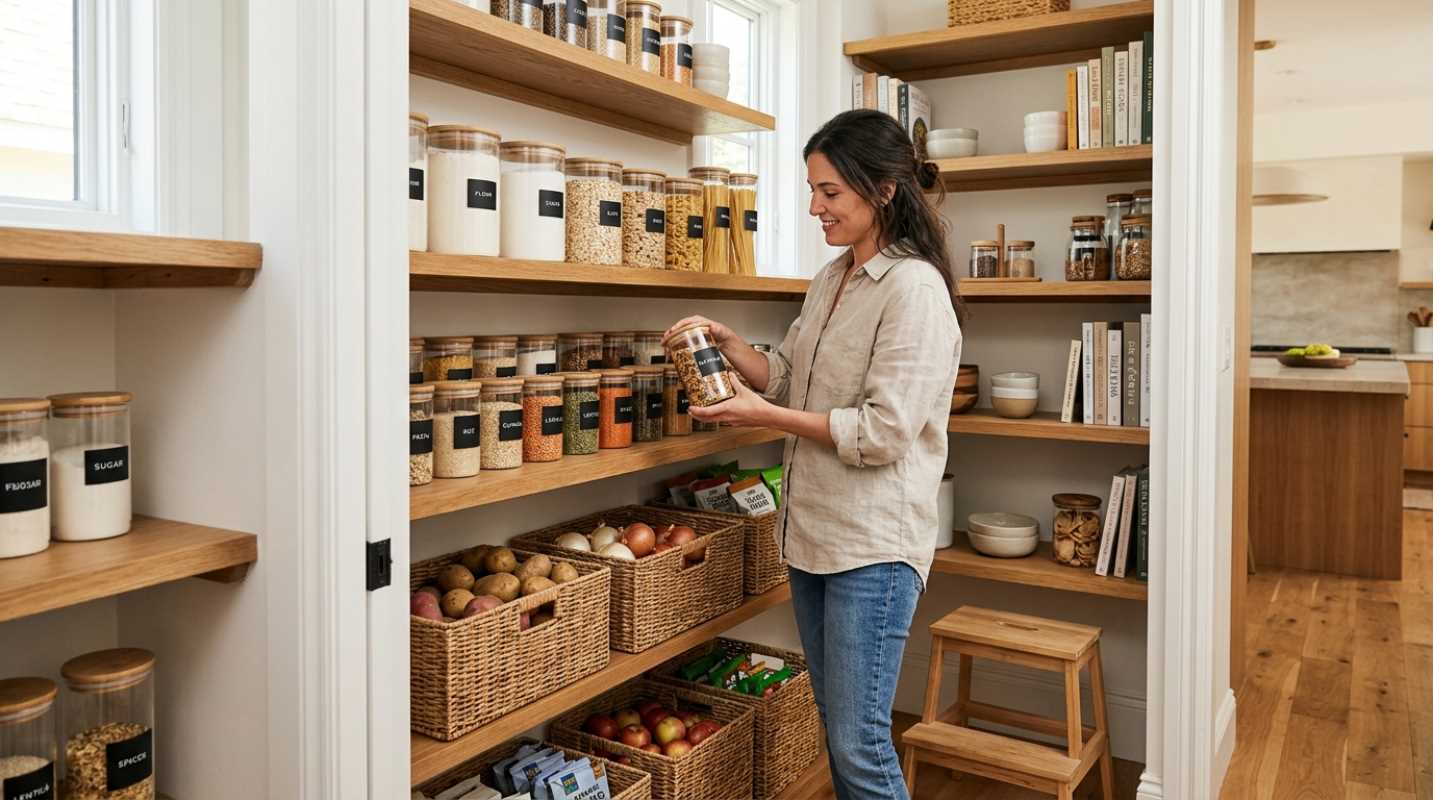
To build a pantry that stays neat, you need to think in zones. Think of your shelves like prime real estate. The eye-level and waist-level areas are your prime real estate. That's where your everyday needs belong.
Recent design studies show that 45% of renovating homeowners choose to install or upgrade built-in pantry cabinets, while 17% choose full walk-in pantries.² Whether you have a compact cabinet or a spacious walk-in butler's pantry, layout rules remain the same.
Group items by daily routines rather than random product categories. Here are the core zones you should set up
• Prime real estate zone - Place daily breakfast foods, coffee supplies, and quick dinner staples between chest and waist height. You shouldn't need to bend down or reach on tiptoes for items you use every morning.
• Heavy storage base zone - Use the bottom shelves or deep pull-out drawers for heavy bags of flour, canned goods, and bulk beverages. About 36% of modern kitchen upgrades now feature deep base drawers because they bring items forward instead of letting them get lost in the back.²
• Top shelf zone - Reserve the highest shelves for lightweight, infrequently used items like seasonal baking molds, paper towels, or specialty party platters.
• Kid-friendly snack zone - Put healthy, pre-portioned snacks on lower shelves where kids can reach them without asking for help or climbing on countertops.
• Dedicated appliance station - If you have space, set up an appliance garage with internal power outlets. Keeping coffee makers, blenders, and air fryers inside the pantry keeps the main kitchen countertops clean and free of clutter.
Optimizing vertical space matters. Standard deep shelves often turn into dark caves where canned goods disappear. Adding pull-out trays, tray organizers for cookie sheets (installed by 59% of renovators), and Lazy Susans instantly solves accessibility issues.²
The Power of Food Storage Container Systems
Transferring dry goods from original packaging into uniform canisters isn't just a stylistic choice. It serves two practical purposes: eliminating visual noise and keeping food fresh longer.
Store packaging comes in a chaos of different shapes, sizes, and colors. When you decant grains, pasta, and flour into matching containers, your eye processes the shelf as a clean, orderly system. More importantly, air-tight containers protect your ingredients from humidity, stale air, and household pests.
When picking out containers, consider these options
• Glass canisters - Excellent for long-term storage and non-porous hygiene. Glass doesn't stain or hold onto smells, making it ideal for sauces, spices, and grains. Keep in mind that glass is heavier and more fragile if dropped.
• BPA-free clear plastic - Lightweight, shatterproof, and easy to handle for kids or high-reach shelves. Clear plastic lets you check your stock levels at a single glance.
• Vacuum-sealed containers - Best for specialty coffee beans, delicate nuts, and bulk dry goods that spoil quickly when exposed to air.
Labeling and Inventory Tips for Pantries
A great layout falls apart if nobody in your household knows where things belong. Clear labeling creates an intuitive map so everyone returns items to their correct spots.
You don't need fancy equipment to get great results. Custom vinyl stickers, metal clip tags, or chalkboard paint on glass jars all work well.
Here are three practical ways to manage your food supply
1. Group by lifestyle needs - Label bins according to specific routines, such as "Gluten-Free," "School Snacks," or "Baking Neededs."
2. Practice the First-In, First-Out method - When you bring home fresh groceries, place new items behind older ones on the shelf. This habit make sures you use older stock before opening new packages.
3. Keep a running list - Place a small magnetic notepad inside your pantry door. When a container runs low, write it down immediately to avoid duplicate purchases at the store.
Habits That Keep Your Pantry Organized
Maintaining an organized pantry doesn't take hours of effort every week. Small, consistent actions stop small messes from piling up into chaotic disasters.
Lighting makes a huge difference in keeping your space organized. In fact, 88% of modern kitchen projects prioritize task and feature lighting.³ Recessed vertical LED strip channels or simple motion-sensor lights turn on automatically when you open cabinet doors. Bright lighting illuminates dark corners so cans don't slip out of view.
Set aside five minutes at the end of every week before you do your grocery shopping. Do a quick scan of your shelves. Group loose items back into their designated bins, throw away expired food, and wipe down sticky sauce drips.
As seasons change, your cooking habits shift too. Swap soup ingredients to prime eye-level shelves during winter, then replace them with grilling marinades, cold drink mixes, and summer snacks when warmer weather arrives. Adjusting your setup keeps your kitchen stress-free all year long.
Sources:
1. NKBA 2025 Kitchen Trends Report
https://nkba.org/news/design-trends-news/nkba-kbis-kitchen-trends-summit-highlights-2025-kitchen-trends-report-and-new-video-series/
2. Houzz 2025 U.S. Kitchen Trends Study
https://st.hzcdn.com/static/econ/2025_Houzz_US_Kitchen_Trends_Study.pdf
3. KBB Online NKBA 2025 Report
https://kbbonline.com/trends-inspirations/nkba-2025-kitchen-trends-report/158865/