Have you ever spent a full Saturday afternoon arranging clothes, buying matching bins, and color-coordinating shirts, only to watch the chaos return two weeks later? You are not alone. Most of us have experienced the frustration of a freshly organized space changing back into a mountain of clutter.
The problem rarely lies in your effort. It lies in the approach. Social media pushes pristine picture-perfect storage arrangements with folded sweater towers and matching acrylic displays. They look incredible in photos, but they often crumble when real life happens on a busy Tuesday morning.
Aesthetic storage focuses entirely on how a closet looks, while functional organization focuses on how you live. The best systems adapt to your routines instead of forcing you to adopt unrealistic habits. Building a closet setup that stays tidy for years comes down to practical, repeatable approaches.
The Foundation Decluttering Before You Buy
The most common mistake people make is heading to the store for clear bins and fancy organizers before taking inventory of what they actually own. Buying containers first is like putting a band-aid on a dam break. You end up neatly organizing items you do not even use.
Research shows that the average person wears only 20% of their wardrobe 80% of the time.³ The remaining 80% sits on shelves, choking your real estate and making it harder to reach the clothes you love.
Before you spend a dime on hardware, pull everything out of your closet for a complete audit. Sort items into three clear piles: keep, donate or sell, and toss. Ask yourself a few direct questions about each item:
• Has it been worn in the past 12 months?
• Does it fit you right now?
• Is it damaged, stained, or out of style?
If the answer is no, let it go. Once you have edited your belongings, adopt a strict one-in, one-out rule. When you buy a new pair of jeans, an old pair leaves. This keeps your inventory stable over time.
Finally, separate your high-frequency clothes from seasonal gear. Heavy winter coats have no business crowding your summer shirts in July. Store off-season items in vacuum-sealed bags or upper bins to keep your prime closet area clear.
Smart Approaches for Getting the Most from Small Storage Spaces
Apartment and home sizes have tightened in recent years, with global floor plans shrinking by roughly 12% over the last decade.² Making the most of a compact footprint means thinking differently about layout and structure.
Most standard closets waste upwards of 40% of their usable vertical height by relying on a single top shelf and a single hanging rod. You can double or triple your usable room by applying a few smart layout upgrades
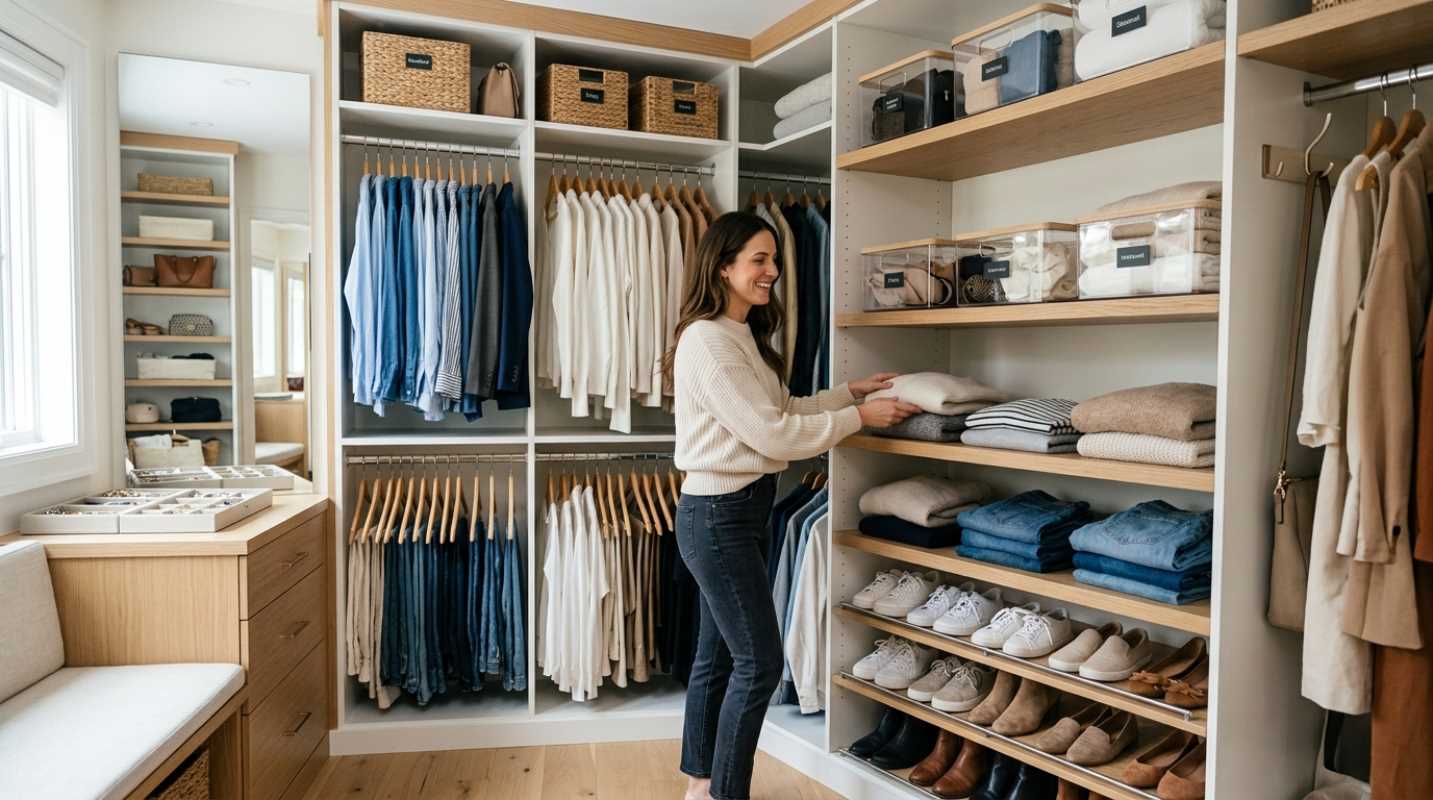
• Vertical Zoning: Divide your space into physical zones based on reach. Put out-of-season clothes and luggage on upper shelves above eye level. Keep daily shirts, jackets, and workwear in the prime zone between eye and waist level. Reserve the bottom zone for shoes and lower hanging rods.
• Double Hanging Rods: Hanging a secondary rod below your main rod instantly doubles your horizontal space. Use the top rod for shirts and jackets, and the lower rod for folded pants or skirts.
• Slim Felt Hangers: Bulky plastic and wooden hangers waste massive amounts of space. Switching to uniform, slim velvet hangers can reclaim up to 30% to 50% of your rod capacity while keeping slippery fabrics from falling off.
• Door-Mounted Organizers: Mount utility tracks or over-the-door racks on the inside of closet doors. They are perfect for staging belts, scarves, bags, or everyday shoes without taking up shelf space.
• Toe-to-Heel Shoe Stacking: When lining up shoes on narrow shelves, alternate the direction of each shoe (one facing front, one facing back). This aligns the widest point of one shoe next to the narrowest point of the other, fitting extra pairs onto every shelf.
Choosing the Right Hardware Bins, Shelving, and Modular Systems
When you are ready to invest in hardware, choose components that match your budget and wardrobe profile. Around 59% of homeowners invest in custom or modular storage systems to streamline their daily routines.¹
• Modular Track Systems: Wall-mounted track setups like IKEA PAX or the Elfa system from The Container Store offer incredible versatility. You can adjust shelf heights, add slide-out mesh drawers, or move hanging rods as your wardrobe shifts over time.
• Custom Built-Ins: Options from specialized companies offer high-end finishes, integrated lighting, and custom shoe drawers. They look beautiful and get the most from square footage, though they require a larger budget and fixed installation.
• Clear vs Opaque Containers: Clear acrylic bins are fantastic for high shelves where you need to see what is stored without pulling the box down. Opaque fabric bins work best on open lower shelves, hiding visual clutter like gym gear or socks.
Select shelf dividers to keep folded sweaters from slumping over into leaning towers. If you own many handbags, clear acrylic purse dividers will keep soft totes standing upright so they maintain their shape.
Maintenance Hacks: Keeping Your System Alive
Building a great closet setup is only half the battle. Keeping it running smoothly requires simple maintenance habits that take minimal effort.
• The Weekly Reset: Spend ten minutes every Sunday putting stray items back in their designated zones, straightening hangers, and folding items that drifted out of place. Ten minutes a week prevents a two-hour cleanup project at the end of the month.
• Clear Labeling: Labeling shelf edges, bins, and drawer dividers removes guesswork. When every item has an obvious, visible home, family members and partners are far more likely to put things back where they belong.
• Seasonal Adaptations: Adjust your setup twice a year when seasons change. Shift shorts and tees to eye level during spring, and swap them with sweaters when winter approaches.
Your storage system should serve your lifestyle, not the other way around. If you find yourself constantly throwing jackets over a chair because hanging them up takes too many steps, add open hooks to your wall. Adapt the hardware to match your actual habits.
Organization as a Lifestyle, Not a Project
The best storage system is never the most expensive or the most fashionable one. It is simply the system you will consistently use.
Focus on friction-free daily flow rather than absolute visual perfection. If a system feels too complicated to maintain during a busy week, simplify it. Remove unnecessary lids from bins, add open baskets, or reduce the number of steps required to put an item away.
Take a hard look at your closet space today. Start small by picking a single shelf or drawer to edit, build momentum, and build a setup that gives you time back every morning.
Sources:
1. Mordor Intelligence
https://www.mordorintelligence.com/industry-reports/united-states-home-organizers-and-storage-market
2. Business Research Insights
https://www.businessresearchinsights.com/market-reports/home-storage-and-organization-market-122230
3. Becoming Minimalist
https://www.becomingminimalist.com/clutter-stats/